

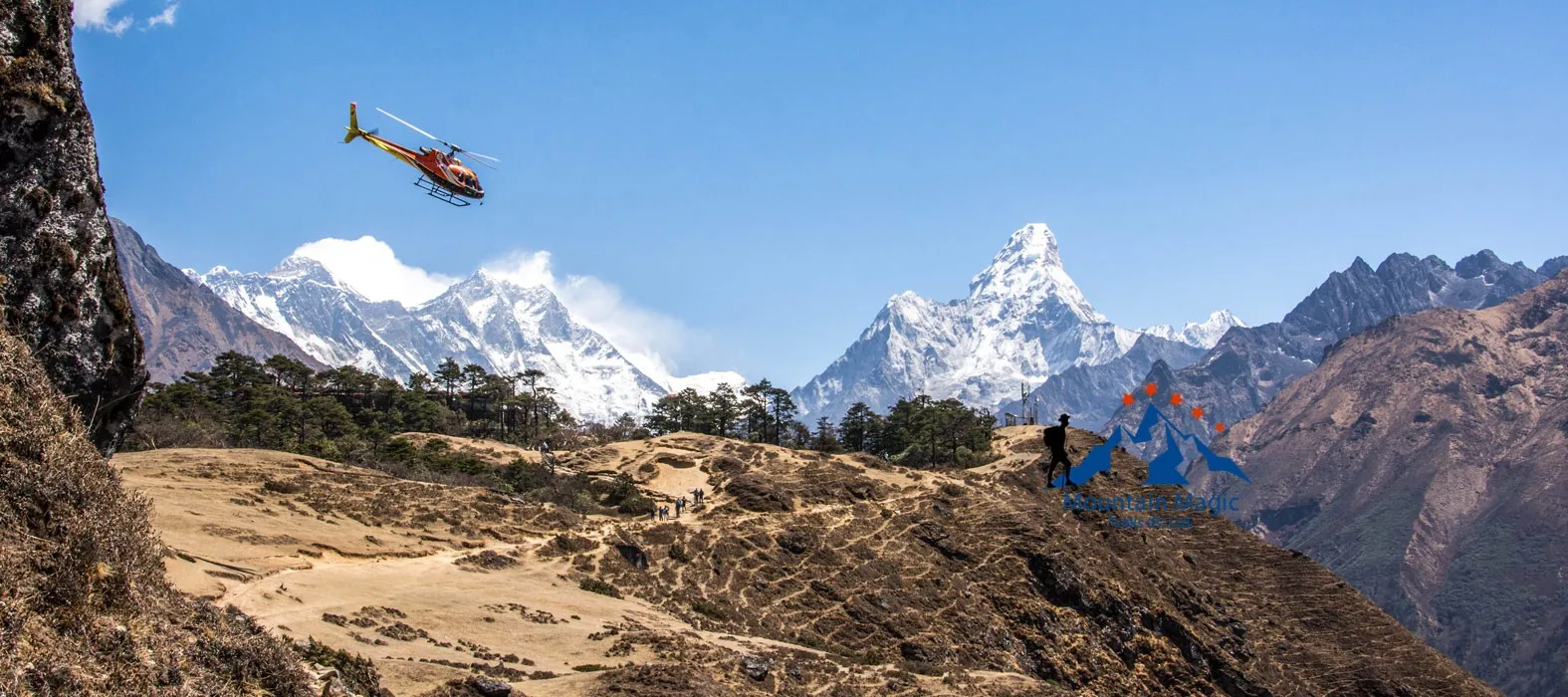
When people hear about Everest, they often think about huge peaks, glaciers, and adventure.
But the Khumbu has another side.
There are quiet mornings in mountain villages, long stretches of peaceful trail, small tea houses, prayer flags moving in the wind, and moments when the only sound is your own footsteps.
The Everest Base Camp Trek With Helicopter Return gives travelers time to experience these quieter moments while walking toward Everest Base Camp. After reaching the major highlights, the helicopter return offers a completely different way to leave the mountains.
Early Mornings Feel Different Here
A trekking day often starts early.
The air can be cool, the trails can be quiet, and the mountains may look completely different under morning light.
Enjoy the Calm Before Walking
Do not rush through breakfast just because you want to start early.
Take a few minutes to prepare your daypack and check your water.
Once you start walking, notice how the mountains look in the changing light.
These quiet moments are easy to miss when you focus only on reaching the next village.
The Lower Trail Has Its Own Character
The first part of the journey around Lukla and Phakding is greener than the high sections.
You will see hills, rivers, forests, stone walls, and local homes.
Watch Life Along the Trail
The route is also part of everyday life for local communities.
You may see people carrying supplies, animals moving along the trail, or locals working around their homes.
These scenes show that the trail is not simply a tourist route.
It is also an important part of life in the region.
Suspension Bridges Add a Little Excitement
Crossing suspension bridges is one of the memorable experiences of the lower Khumbu.
Some bridges stretch high above rushing rivers.
Cross Without Rushing
The safest approach is simple.
Walk steadily and follow your guide’s instructions.
If you feel nervous, focus on the trail ahead instead of looking down.
Once you reach the other side, take a moment to look back.
The view can be surprisingly beautiful.
Namche Is a Place to Slow Down
The climb to Namche Bazaar is a major step in the trek.
The village sits among mountains and becomes an important resting point.
Treat Acclimatization as Part of the Trek
The itinerary includes an acclimatization day in Namche.
Use this time wisely.
Walk around the village, explore nearby areas, or simply rest.
You do not need to prove your fitness on an acclimatization day.
The real purpose is to prepare your body for higher elevations.
Tengboche Brings a Sense of Peace
The trail continues through forested areas before reaching Tengboche.
The village is known for its Buddhist monastery and mountain surroundings.
Take Time to Observe
You may see prayer flags, prayer wheels, and other signs of local Buddhist culture.
If you visit the monastery, behave respectfully.
Keep noise low and follow any local instructions.
The quiet atmosphere can make this section feel very different from the busier parts of the trail.
Dingboche Changes the Feeling of the Trek
At Dingboche, the landscape becomes more open.
The trees are fewer, and the mountains feel much closer.
The air is also thinner.
Accept That Your Pace Will Change
A slow walking speed at high altitude is normal.
You may need more breaks than you did earlier.
Do not see this as a weakness.
Your body is adjusting to the environment.
The itinerary includes an acclimatization day in Dingboche, which gives you another chance to rest before moving higher.
The Trail Becomes Quieter
Beyond Dingboche, the surroundings become increasingly rocky.
There are fewer trees, fewer houses, and long stretches where the mountains dominate the view.
Enjoy the Silence
This is a good place to stop talking for a while.
Listen to the wind.
Watch the clouds.
Look across the valley.
The high Himalayan landscape has a quiet quality that is difficult to experience in busy cities.
You do not need constant entertainment when the mountains are around you.
Lobuche Brings You Closer to Everest
Lobuche is one of the final major stops before Gorakshep.
The goal now feels much closer.
Keep Your Focus on the Trail
Excitement can make you forget that the altitude is still increasing.
Continue at a steady pace.
Drink water regularly.
Eat enough.
Take short breaks.
The best way to reach Base Camp is not to rush toward it.
Thukla Offers a Moment of Reflection
The memorials near Thukla honor climbers who died in the Everest region.
They stand in a landscape that can feel both beautiful and severe.
Remember What the Mountains Demand
These memorials are a reminder that high-altitude travel comes with real risks.
Weather can change.
The cold can become intense.
The air is thin.
The terrain can be difficult.
Respecting these conditions is part of being a responsible trekker.
Gorakshep Is a High-Altitude Stop
Gorakshep sits at roughly 5,125 meters.
At this height, even simple walking can feel tiring.
Keep Your Essentials Close
For the Base Camp section, a small daypack is enough.
Carry items such as:
-
Water
-
Snacks
-
Warm layers
-
Sunglasses
-
Sunscreen
-
Camera
-
Personal essentials
Avoid carrying things you will not use during the day.
Base Camp Is About More Than a Photo
The walk from Gorakshep to Everest Base Camp is one of the most important parts of the journey.
The listed elevation is around 5,364 meters.
The route passes through a rocky landscape with views of glaciers and surrounding peaks.
Look Around When You Arrive
Take photographs if you want.
But give yourself time to simply stand there.
You have spent days walking toward this point.
Think about the lower valleys you left behind.
The difference between the beginning and the end of the trail is part of what makes the trek special.
Kala Patthar Adds a New View
The climb to Kala Patthar provides another major highlight.
At approximately 5,545 meters, it is the highest point listed in the itinerary.
Sunrise Creates a Different Landscape
The early morning can be very cold.
But the changing sunlight can transform the mountains.
The peaks slowly brighten as the sun rises.
Everest and nearby mountains may appear in completely different shades within minutes.
Take time to enjoy the scene before heading back.
The Helicopter Ends the Story Differently
The Everest Base Camp Trek With Helicopter Return offers an unusual ending.
After walking through the Khumbu for days, you leave the high mountains by helicopter.
Watch the Landscape Open Up
From the air, the trail looks completely different.
Villages become small.
Rivers become thin lines.
Mountain ridges connect into a much larger picture.
You may recognize parts of the route that you walked earlier.
It is a chance to see the journey from a perspective that is impossible from the trail.
Do Not Forget About Mountain Weather
Helicopter operations depend on weather and visibility.
A flight that is expected at one time may change because conditions are not suitable.
Keep Your Plans Flexible
If you have another flight after returning to Kathmandu, leave enough time between the two.
Avoid creating a schedule where a small delay causes a major problem.
Flexibility is an important part of mountain travel.
The Quiet Moments Matter Most
The Everest Base Camp Trek With Helicopter Return is often described through its biggest highlights.
Everest Base Camp.
Kala Patthar.
The helicopter flight.
But the quieter parts may stay with you longer.
A peaceful morning.
A cup of tea after a long climb.
A conversation with a local guide.
The sound of a river.
The view from a village path.
These moments give the trek its personality.
Let the Journey Be Bigger Than the Destination
Reaching Everest Base Camp is an important achievement.
But the journey becomes richer when you notice everything along the way.
The lower valleys introduce you to the Khumbu.
Namche gives your body time to adjust.
Tengboche offers a glimpse into local culture.
Dingboche prepares you for high altitude.
Lobuche brings you closer to Everest.
Base Camp marks the main goal.
Kala Patthar gives you a wider mountain view.
Then the helicopter takes you above the route you just completed.
The Everest Base Camp Trek With Helicopter Return is not simply about reaching Everest and flying home.
It is about experiencing the mountains at walking speed, appreciating the quiet moments, and finally seeing the entire landscape from above.
FAQs
How high is Everest Base Camp?
The listed elevation is approximately 5,364 meters.
What is the highest point on the itinerary?
Kala Patthar is approximately 5,545 meters above sea level.
Where are the acclimatization days?
The itinerary includes acclimatization days in Namche Bazaar and Dingboche.
Is the trek to Base Camp done on foot?
Yes. Travelers walk to Everest Base Camp and Kala Patthar before taking the helicopter return.
What makes the helicopter return different?
It avoids the need to retrace the full trekking route and gives travelers an aerial view of the Khumbu.
Can weather affect the helicopter?
Yes. Mountain weather can affect flight operations, so keeping extra time in your schedule is sensible.